Streamlined Kit
Peanut KING's streamlined kits drive the mainstream


Functional Kit
Peanut KING is perfectly compatible from sensing to control

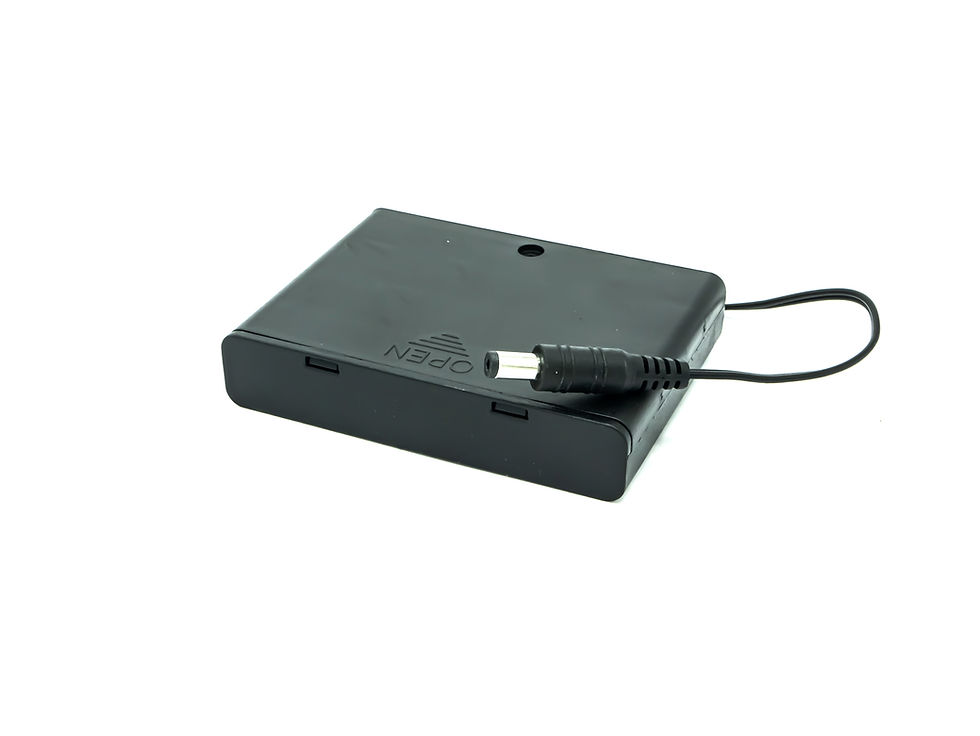
Electronic Security Mechanisms :
Short circuit protection
Overload protection
4.5~12V DC power
PILA V4.2 provide :
1 OLED Interface
PILA V4.2 provide :
4 UltraSound Sensor Port
4 Analog Port
6 Digital Port
PILA V4.2 provide :
8 Color Sensor Port
3 Serial Port
4 Servo Port
PILA V4.2 provide :
8-channel software I²C
Total of 13 I²C interfaces
(8 software + 5 hardware)

PILA V4.2 provide :
4 motor interfaces
Each peak current of up to 6A
PILA V4.2 provide :
Supports 5V VCC input/output
Provides XT60 power connector
Peanut KING PILA V4.2
Compliant with international robot soccer regulations
Suitable for middle school students to learn and use for professional training

I²C Interface x8
I²C Interface
Reset button
Analog IO Interface x4
Digital IO Interface x7
Motor port x2
Power switch
Power supply
Button x3
OLED Display
I²C Interface
Peanut KING Uno Shield
Integrates multiple commonly used interfaces
Solve the problems of insufficient native pins and complex wiring in Arduino


Peanut KING Compass Module
High-precision electronic compass modules
Help robots achieve accurate orientation positioning and navigation
Continuously Updated Software Resources
Compact Size
Easy Installation
Low Power Consumption
Fast Response Time
User-friendly Interface &
Cross-platform Compatibility
Anti-interference Design &
Environmental Adaptability
Real-time Data Fusion &
Algorithm Support
High-precision Geomagnetic Sensing &
Direction Positioning
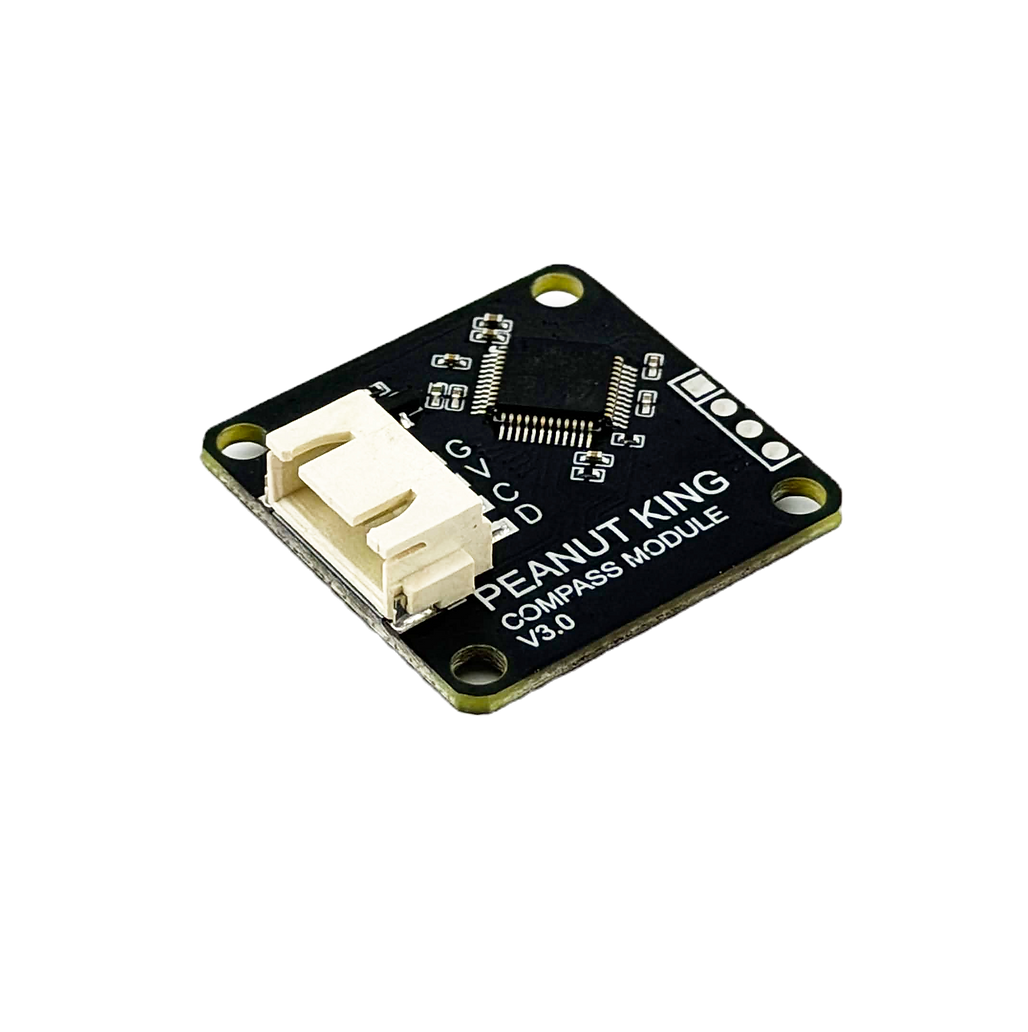
Peanut KING provides complete teaching resources for the Compass Module, ensuring alignment with the latest teaching trends and promoting STEAM education.
Peanut KING Compass Module is suitable for various frame or structural designs, reducing hardware limitations and allowing teachers and students to devote more energy to software development.
Suitable for use with battery-powered mobile robots, ensuring that the robot can maintain the correct course in complex environments, maintain robot site positioning or team collaboration tactics, and avoid errors caused by time delays.
Peanut KING micro:bit Shield V2
Integrates multiple sensor interfaces and circuit management
Address the lack of native interfaces in micro:bit
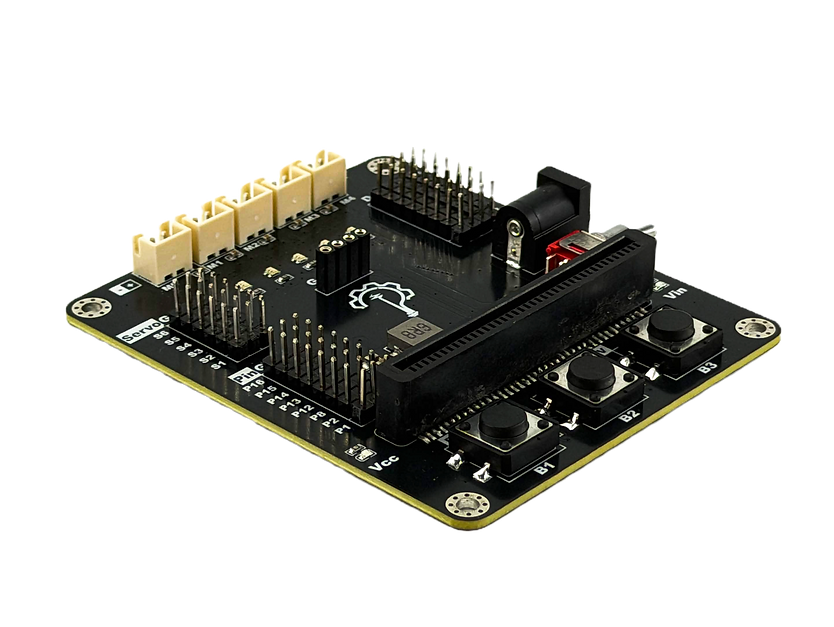
Motor Port x5
Servo Interface x8
Digital/Analog IO Interface x8
I²C Interface x8
Power Supply
Power Switch
OLED Display
I²C Interface
Buttons x3
micro:bit adapter
Diverse Sensor & Module Interfaces
Peanut KING micro:bit V2 Shield offers a rich array of sensor ports, including those for ultrasonic ranging, color sensors, collision detection, temperature and humidity sensors, and servo motors.
Furthermore, the V2 Shield features a well-organized and clearly labeled interface, employing a foolproof design to reduce the risk of incorrect wiring.
In addition, the V2 Shield boasts high compatibility, supporting common modules on the market and allowing schools to easily expand their systems according to their budgets.
Power Management & Protection Circuit System
The V2 Shield features a built-in high-efficiency power management module, supporting multiple power supply methods (USB, battery, or external power) as well as providing regulated output, overcurrent and short-circuit protection to ensure the safe operation of micro:bit and external modules.
Students can learn basic circuit safety knowledge, power distribution principles and troubleshooting techniques, reducing damage caused by wiring errors or current overload.
Excellent power management extends the lifespan of the V2 Shield, reducing school maintenance costs. This reflects Peanut KING's emphasis on educational safety and durability, giving students peace of mind when using the V2 Shield.
Communication & Expansion Flexibility
The V2 Shield retains and optimizes the micro:bit's native communication capabilities, adding extra I/O pins and a wireless module support interface as well as allowing students to easily connect Bluetooth, Wi-Fi, or other communication devices.
Students can develop wireless remote control, data logging or multi-device collaboration projects, learning communication protocols and fundamental IoT concepts.
The V2 Shield boasts a highly expandable interface, supporting future feature upgrades without requiring motherboard replacement. Students can flexibly engage in cross-platform collaboration, fostering innovative thinking and teamwork skills.
Teaching Resource Matching & Usability Optimization
Peanut KING provides complete educational resources for the V2 Shield, including sample programs, course guides, and calibration tools.
The V2 Shield is easy to install and intuitive to operate, making it suitable for primary and secondary school students. Students can quickly load and modify samples, gradually mastering hardware integration and programming skills.
The educational resources are practical and easy to understand, helping teachers reduce preparation time and focus on concept teaching and creative guidance. In school applications, this package allows the V2 Shield to be quickly integrated into existing micro:bit courses, achieving a smooth transition from screen to physical device, stimulating students' learning motivation and sense of accomplishment.
Peanut KING Color Sensor V1
Real-time detection of object color, brightness, and ambient light
Practical and cost-effective.
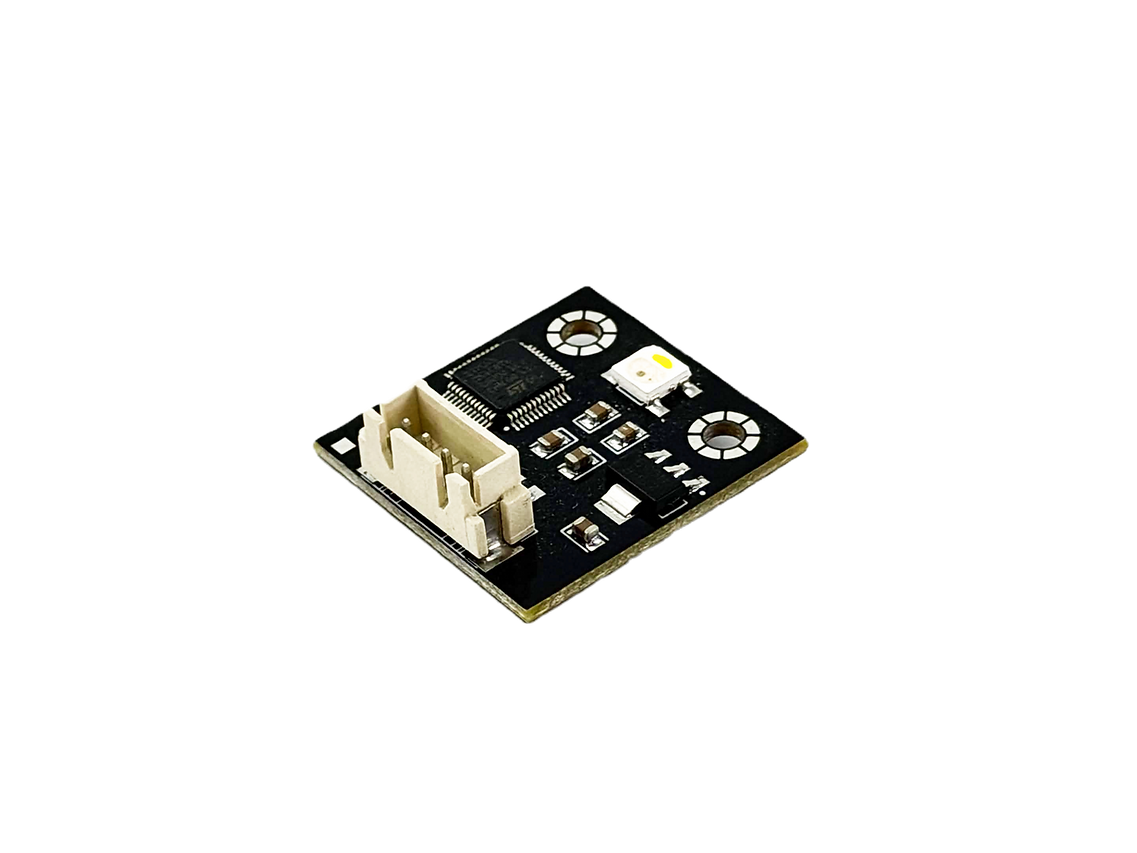
High-precision RGB Color Recognition Function
The Peanut KING Color Sensor V1 uses an advanced optical sensing chip that supports multiple color modes. It can accurately capture the intensity of the three primary colors of red, green and blue, and calculate the corresponding color values and brightness data with high accuracy and fast response.

Anti-interference Capability
The Peanut KING V1 color sensor features a reliable anti-interference design, making it suitable for use in diverse environments such as classrooms, hallways, or outdoors. This ensures consistent color recognition results, avoids programming errors caused by changes in lighting, and improves overall system reliability.
Flexible Interface &
Cross-platform Compatibility
The Peanut KING Color Sensor V1 offers a standard I²C communication interface and digital output mode, perfectly compatible with mainstream development boards such as Arduino and micro:bit. It features simple wiring and a rich library of programs. In addition, the Color Sensor V1 is compact and easy to install, making it suitable for various frame structures and lowering the hardware barrier.
Low Power Consumption Design & long-term Stability
The Peanut KING Color Sensor V1 operates in a low-power mode, making it suitable for battery-powered mobile robots and extending the usage time on a single charge. In addition, the Color Sensor V1 is robust and durable, with good shock and dust resistance, able to withstand the bumps and wear of daily teaching and competitions. In practical use, its low power consumption reduces the frequency of battery replacements, lowering operating costs; its high stability provides consistent data, allowing students to obtain more accurate results.
Peanut KING Compound Eye Module
Provides wide-angle detection and multi-directional perception capabilities
Making it an excellent component for enhancing robot perception

Multi-directional Wide-angle Sensing Capability
Real-time Data Fusion &
Intelligent Decision Support
Flexible Interface &
Easy Integration Features
Low Power Consumption & Durable Design
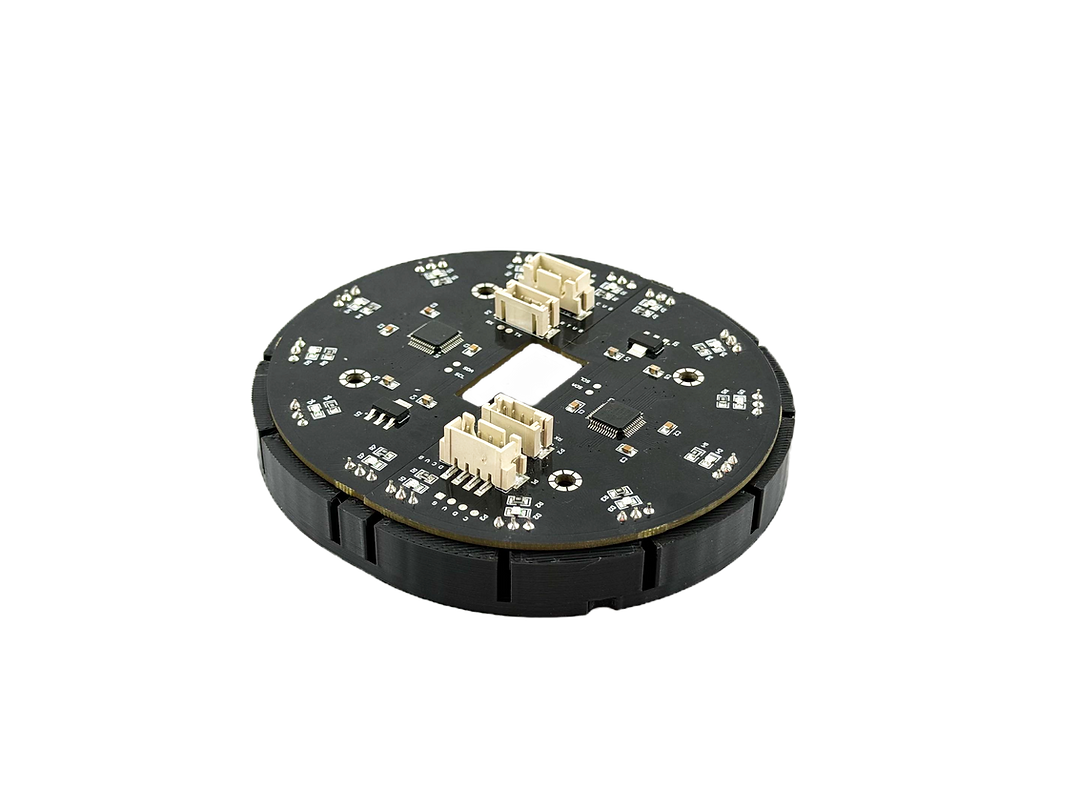
Wide Range of Environmental Perception
The Peanut KING compound eye module consists of multiple infrared or optical sensors, mimicking the structure of a biological compound eye. It can simultaneously detect obstacles, distances, and changes in light in multiple directions, including in front, left, right, and diagonally.
This design solves the problem of narrow fields of view for single sensors. Students can install the module in front of or around the robot to achieve omnidirectional obstacle avoidance, ball tracking, and terrain boundary detection.
Moderate Size
Easy to Install
Suitable for various frame designs, students can develop applications such as wide-angle obstacle avoidance vehicles, intelligent patrol systems, or interactive games, stimulating creativity.
Teachers can leverage its ease of use to conduct modular teaching, lowering the learning threshold. This flexibility makes the Peanut KING compound eye module a popular expansion component in the STEAM ecosystem, helping schools enrich their curriculum with limited resources.
Complete Software Teaching Resources
The Peanut KING compound eye module boasts comprehensive teaching resources, including course guides, sample programs, and project inspiration. These resources, compiled by educational experts, are suitable for students of all levels.
Students can progress from basic detection to multi-module collaboration, cultivating systems thinking skills and bridging theory and practice, fully demonstrating the educational professionalism of Peanut King Solution Limited.
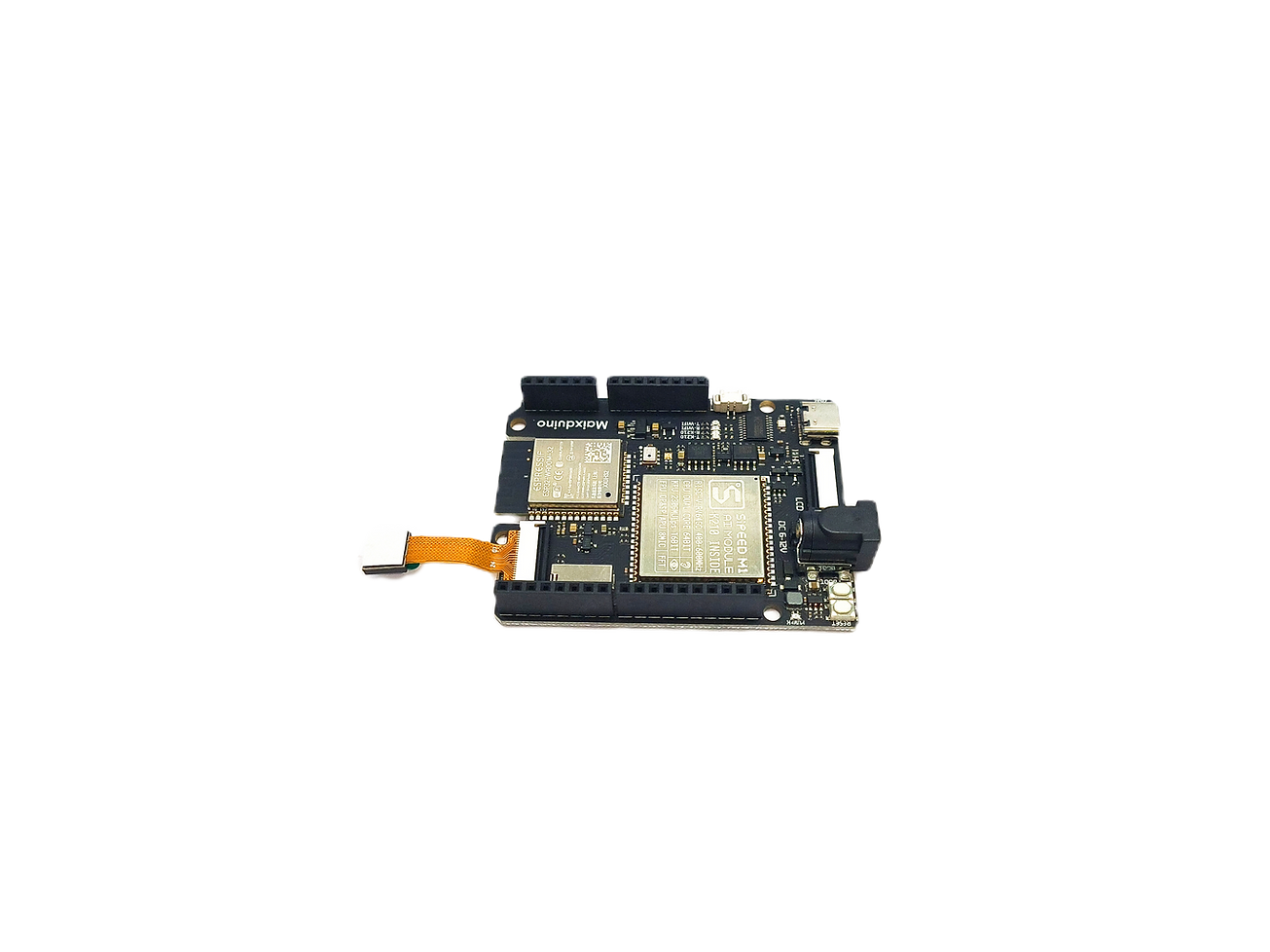
MaixDuino
Designed specifically for STEAM education beginners
Allowing students to easily enter the field of AI computing

High-performance K210 Dual-core Processor
Kendryte K210 dual-core RISC-V processor boasts a clock speed to 400MHz
Features powerful computing capabilities & low power consumption
The processor integrates a neural network accelerator (KPU), enabling efficient execution of convolutional neural network models
Suitable for AI tasks such as real-time image recognition & speech processing
_______________________________________________________________________________________________________________________________________________________________________
Students use the Arduino-compatible environment to develop programs
Object detection, facial recognition, or sound classification, achieving a balance between computational performance & ease of use
Even beginners can experience the charm of AI through graphical tools/simple Python scripts
Integrated Visual Processing & Camera Interface
MaixDuino integrates an OV2640 or compatible camera interface
Supporting real-time image capture and processing
Enabling functions such as object detection, color tracking & face recognition
_______________________________________________________________________________________________________________________________________________________________________
Students can develop visually guided robots / intelligent monitoring systems
Image data is intuitive & easily integrated for multimodal fusion experiments
Teachers can guide students to explore the principles of computer vision, significantly enhancing their autonomy and interactivity
_______________________________________________________________________________________________________________________________________________________________________
MaixDuino boasts stable visual processing capabilities and low power consumption, making it suitable for mobile platforms
It helps students gain a deep understanding of the bridge connecting traditional robotics and AI applications through practical experience


Enriched Peripheral Interfaces & Expandability
MaixDuino Offers a variety of I/O interfaces, including I2C, UART, PWM & SD card slot
Perfectly compatible with Peanut KING sensors, motor drivers & display modules
Students can easily connect ultrasonic, gyroscope or wireless modules to create comprehensive AI robot systems
_______________________________________________________________________________________________________________________________________________________________________
MaixDuino's interface is highly standardized and compatible, reducing the difficulty of hardware integration
Teachers can cultivate students' system architecture thinking and hardware-software integration capabilities
_______________________________________________________________________________________________________________________________________________________________________
MaixDuino also supports MicroPython and C language development, meeting the needs of different learning levels
It helps schools achieve advanced AI teaching with limited resources which is an important tool for Peanut KING in promoting artificial intelligence education

Low Power Consumption & Education-friendly Design
The MaixDuino employs a low-power architecture combined with power management circuitry, making it suitable for battery-powered portable projects and extending usage time
_______________________________________________________________________________________________________________________________________________________________________
Utilizing an LCD display, buttons, and LED indicators
It provides instant feedback and ease of debugging
Students can verify the program's functionality and reduce learning frustration
_______________________________________________________________________________________________________________________________________________________________________
With abundant onboard resources and intuitive operation,
Suitable for primary and secondary school teachers & students
MaixDuino also provides complete development documentation,
sample programs , community support and accelerating the learning curve.
This reflects Peanut KING's deep understanding of educational scenarios,
making AI teaching accessible and fun and easy to achieve


Complete Teaching Resources & Competition Applications
Peanut KING provides MaixDuino with a wealth of educational resources
including course outlines, model libraries, example projects & online micro-lectures
the resources were compiled by Peanut KING staff and cover everything from AI basics to application development.
_______________________________________________________________________________________________________________________________________________________________________
Students can participate in object recognition competitions, smart agriculture projects, or interactive robot creation
Fosters students' innovative thinking and teamwork skills
MaixDuino's AI capabilities help teams implement intelligent tactics & improve competition results
_______________________________________________________________________________________________________________________________________________________________________
This makes MaixDuino a complete learning ecosystem
fully demonstrating Peanut KING's professional commitment and innovative spirit in promoting the popularization of artificial intelligence education
Arduino Uno R3
With a standard pin layout and rich expandability
Suitable for introductory STEAM education in primary and secondary schools

ATmega328P Microcontroller
Core Processing Capabilities

The Arduino Uno R3 features an ATmega328P 8-bit microcontroller with a 16MHz clock speed, 32KB Flash memory, 2KB SRAM, and 1KB EEPROM, providing sufficient processing power and storage to handle sensor data, control actuators, and run simple algorithms.
Students can use the Arduino IDE to write C++ programs to quickly implement functions such as LED control, sensor reading, or motor driving.
The Uno R3's classic and stable processor architecture is suitable for students to understand fundamental concepts such as microcontroller principles, memory allocation, and interrupt handling.
In the Peanut KING kit, the Uno R3 serves as the main control board, stably running multi-sensor fusion programs or simple autonomous decision-making logic. This is one of the reasons why the Uno R3 has become a mainstream educational option, allowing students to experience professional-grade embedded system development at an affordable price and laying the foundation for future learning of advanced Arduino platforms or other microcontrollers.
Standardized Pin Layout &
Enriched I/O Functionality

The Arduino Uno R3 uses the standard Arduino pinout, providing 14 Digital I/O pins (6 of which support PWM output) and 6 Analog input pins for easy connection to sensors, buttons, LEDs, servo motors, and display modules.
This standardized design ensures perfect compatibility with a wide range of third-party shields and modules. Students can easily build circuits to learn Digital/Analog signal concepts, PWM speed control principles, and communication protocols.
The Uno R3's pinout is clearly labeled and includes auxiliary functions such as a reset button and power indicator, lowering the barrier to entry. Teachers can design various experiments, such as PWM breathing lights, Analog sensor readings, or serial communication tests, to cultivate students' hardware integration skills.
In the Peanut KING educational kit, the Uno R3's rich I/O allows students to quickly expand functionality, enabling leaps from simple interactions to complex robotics projects. This pinout design is the core guarantee of the Uno R3's ease of use and expandability, making it widely popular with schools and educational institutions.
USB Interface &
Ease of Programming

The Arduino Uno R3 features a built-in USB-to-serial chip (ATmega16U2), supporting direct USB connection to a computer for programming and serial port monitoring, eliminating the need for an external programmer.
Students can instantly upload their programs and view debugging information via the serial port, significantly accelerating development iteration.
The Uno R3's plug-and-play functionality and comprehensive Arduino IDE support allow students to quickly see their results.
Teachers can utilize the serial port monitoring function for data visualization teaching or real-time feedback experiments, helping students understand program execution flow and variable changes.
In the Peanut KING course, this convenience allows students to focus on logic design rather than hardware settings, reducing learning frustration. This is one of the key reasons why the Uno R3 has become a preferred development board for education, fully demonstrating the ease of use advantages of an open-source platform.
Power Management & Stability Design
The Arduino Uno R3 supports multiple power input methods (USB, DC socket, or Vin pin) and features a built-in voltage regulator and protection circuitry, providing stable 5V and 3.3V outputs.
This design ensures safe operation of the Uno R3 and external modules, maintaining stability even with power fluctuations. Students can learn power management basics, current limiting, and the application of different power supply modes.
The Uno R3's onboard power indicator and reset button facilitate troubleshooting, allowing teachers to design power-related experiments or low-power projects, fostering students' systems thinking abilities.
In real-world robotics projects, the Uno R3's power stability ensures reliable long-term operation, making it a trustworthy main control core in the Peanut KING kit, fully considering safety and durability for educational use.
Open Source & Abundant Teaching Resources

As an open-source hardware platform, the Arduino Uno R3 boasts a large global community and abundant educational resources. Peanut KING provides localized example programs, course guides, and technical support to help schools quickly implement its curriculum.
Students can refer to a vast number of open-source projects for secondary development, cultivating innovation and a spirit of community collaboration. The Arduino Uno R3's resources are open and rapidly updated, suitable for students of all levels.
Teachers can easily build complete curricula from basic programming to robotics competitions. Within the Peanut KING ecosystem, the Uno R3 serves as an entry-level motherboard, smoothly transitioning to advanced platforms.
This ecosystem advantage makes the Uno R3 not just a development board, but also an entry point to the vast world of technology, fully demonstrating Peanut King Solution Limited's commitment to open education.
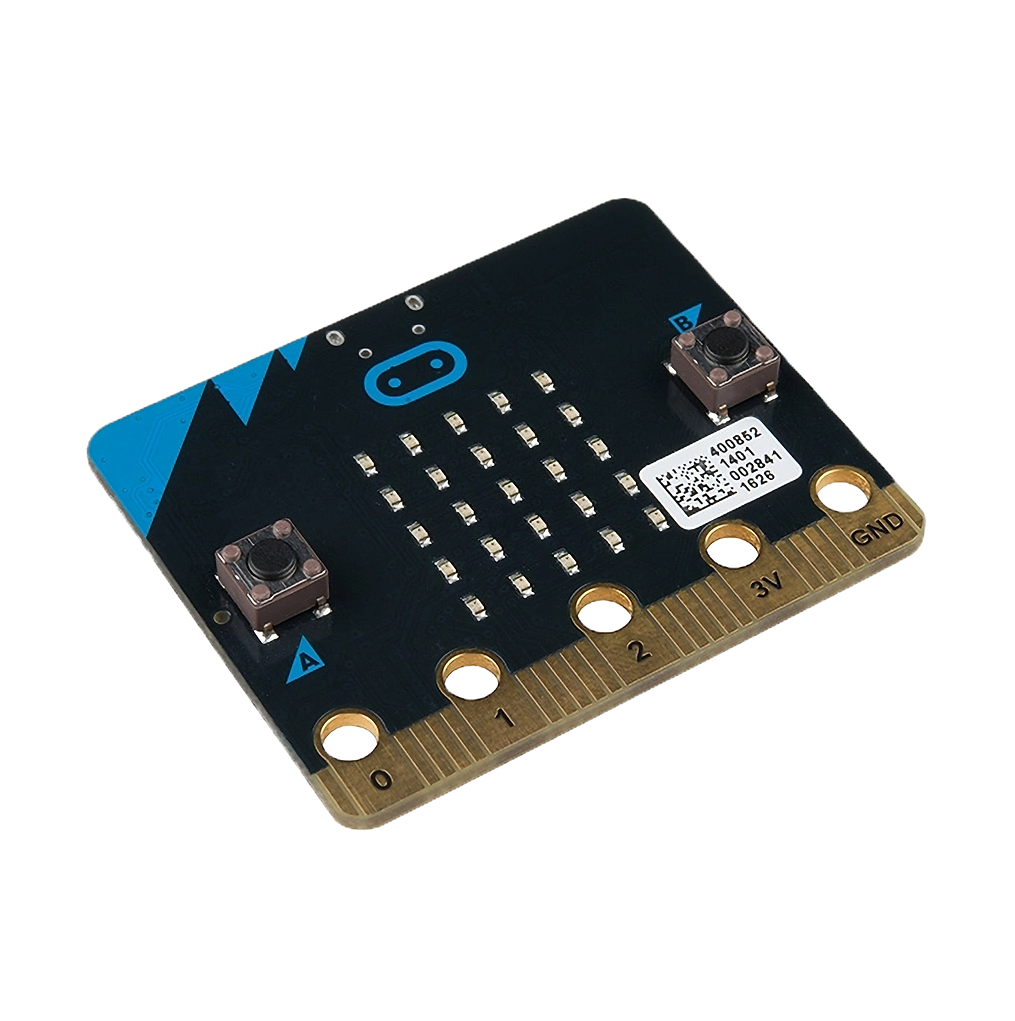
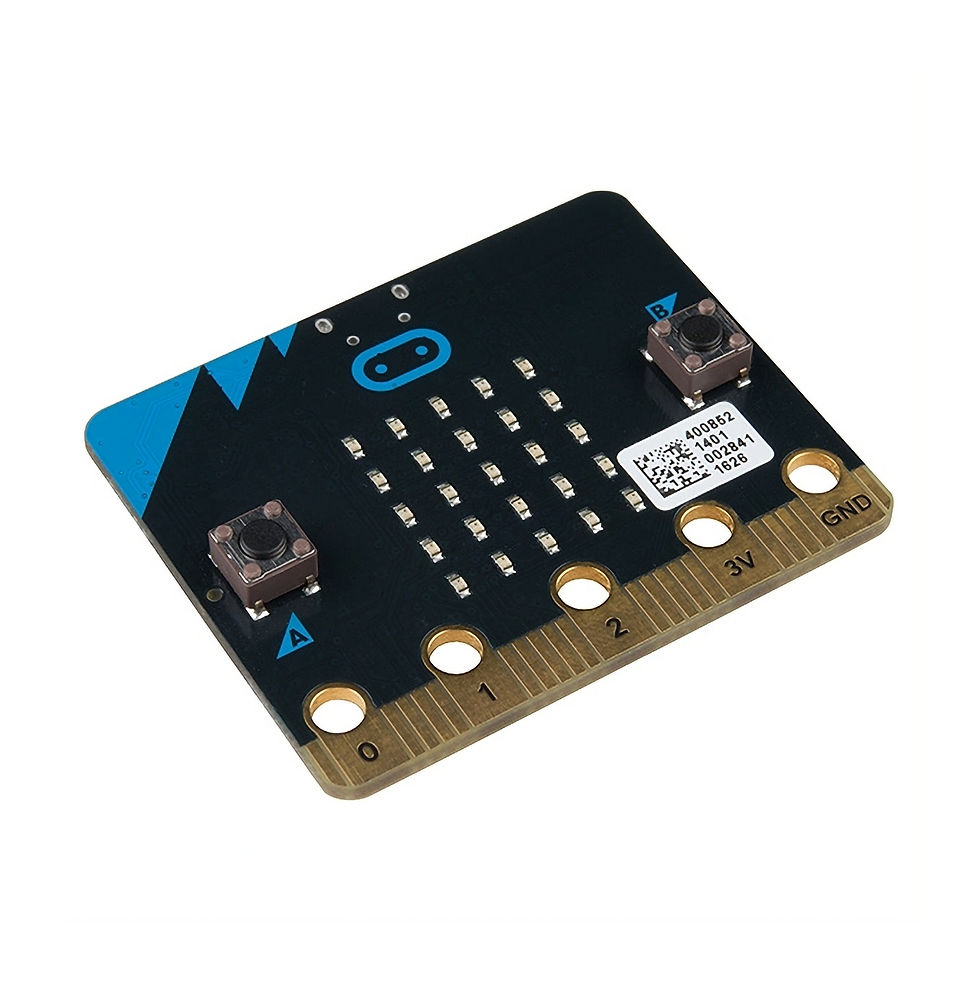
micro:bit v2.2
Upgrade your processor, memory and sensors
A widely recommended entry-level microcontroller board